I’m not a religious person but I have met God. It happened to me while I was in Rwanda. We had climbed a volcano to sit with a gorilla family. It was, for me, one of those moments in life that are barely explainable. At the time, I wasn’t thinking I had found anything spectacular but weeks and months later, the experience infused itself into my soul. I realized I had been fortunate enough to become invisible to another species. The gorillas worked their way around our group; at one point one standing on my feet while dining on fire ants. I didn’t exist for them but was lucky enough to be able to watch them live in their habitat. Being invisible gave me a sense of wonderment. But it was more than that. It was the realization that these animals had been doing this same thing, foraging for food, ripping up tree limbs, caring for their young, communicating with each other, listening to the instructions from the Silverback; for millions of years. Think about that. Millions of years. Their range diminished due to war, human encroachment, poaching, and disease and, thankfully, two African nations saw fit to preserve who was left. I am one of the few people on this planet fortunate enough to meet a mountain gorilla family and to witness the delicate intricacy of our planet.
So, having met God in the jungle of Rwanda, I am hard-pressed to observe Judaism in any meaningful way. I don’t, however, want to reject it. I like being Jewish. I like the religion, or at least some of it. I like the rituals, particularly the ancientness of them.
I was raised in a Reform synagogue. And I’ve been comfortable with that until recent changes have made GB and me just, how do I put this, irritated.
The Temple we go to has three Rabbis, a Cantor, a music director, a band, a choir, and giant screens on either side of the pulpit. The beautiful arc that houses the Torah is dwarfed by the paraphernalia. The original Bima which should generally serve the presence of one person at a time has been replaced by a 5-person standing desk that houses the three Rabbis, the Cantor, and the music director. Several of them hold guitars, as though the band wouldn’t be enough. To the left of the 5-person Bima is the band and the choir. The band also has a set of drums.
The traditional songs have been rewritten by the music director who apparently knows only four notes and one cadence. Is that the word? Or is it rhythm. Anyway, it’s boring. When the Sh’ma is sung, I don’t recognize it its new, updated format. Any sense of spirituality is lost to GB and me.
Temple happens to have a smaller sanctuary available for more peaceful renditions of religious worship. They used to use it. There was no band, no drums, no choir, no giant screens, no three Rabbis. I have asked one of the Rabbis to please use it again for services. I’d like a Rabbi and a Cantor. I don’t want the music director. Or guitars. Or a band with drums.
You ask why I worry about going to synagogue when I’m not religious. Good question. The answer is because in Judaism we memorialize the death of loved ones annually. I wish I could say it was all on the same day, but it isn’t. It’s on the anniversary of their death. It’s called Yahrzeit. The Rabbi and congregation say the Kaddish and the name of the loved one. I go three times a year: my mother, my father, and my brother. I should go for my grandparents, but no. I don’t.
So, GB and I began looking where else we could attend Yahrzeit on a Saturday morning. Since we moved, we are quite far from other synagogues except for the local Chabad.
The Chabad movement began in 1775, and it is a Hasidic sect. It’s ultra-Orthodox and while perhaps 3% of all Jews consider themselves to be members of the sect, nearly 40% of Jews participate in a variety of Chabad activities. Members are conservative. Women wear wigs or cover their hair. Genders are separated for services. Men do not touch women to whom they are not related. My Aunt Nettie was a supporter of the Chabad. She used to send money to the Rebbe in Brooklyn. We made fun of her.
But one of their missions is to connect Jews to Judaism, so they are welcoming and they create programs that will attract Jews, orthodox or not, to attend. They want people to participate in their classes or become members of the Chabad. Today there are Chabads (the reference to the synagogue/school) throughout the world. There are over 3,500 Chabads in 950 cities. There was one in Rwanda, although I didn’t visit. There are at least three in the Denver area. And there happens to be one just a few blocks from where we now live.
My brother’s Yahrzeit was a few weeks ago. GB and I went to Temple and, honestly, it just made us crazy. Everything was sung in the four-note, maybe adagio, honestly, I don’t know, just kind of slow tempo. We did like it when the Cantor sang but he didn’t get enough opportunity. The entire service felt like a Broadway play and at the end, I thought we should have applauded.
So, my father’s Yahrzeit is in early May. GB and I discussed it and decided to try the Chabad. I contacted the Rabbi and gave him my dad’s name (American and Jewish) and date of death. We went this morning.
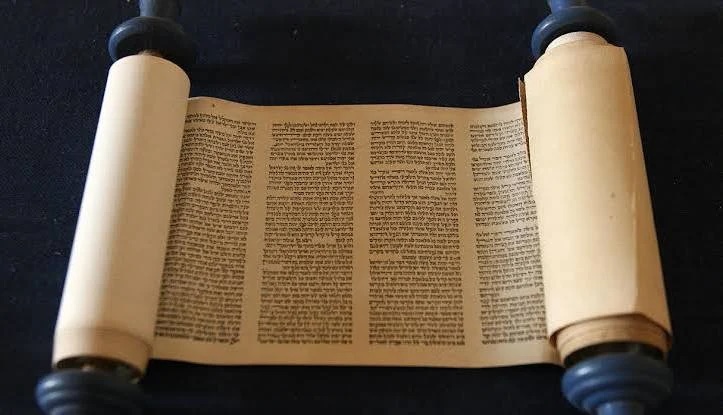
Now, the Chabad is in a small building and nothing is fancy. It wasn’t designed by an architect. It doesn’t have soaring ceilings or great Jewish art affixed to the walls. The synagogue features a Torah that is too large for its Arc and a simple covering. The room is divided by a “Mechitza” (curtain) that separates women and men.
The service was very long. Very long. It began at 10 and ended at 12:30. Way too much for me. But there were lots of redeeming factors. The Kaddish was said three times (the Kaddish is the memorial prayer). A special prayer was given for my father, and the Rabbi addressed me personally to let me know that my dad was watching me from wherever he is and that I’ve given him great “nachas” (happiness, pride). The Rabbi also chatted with members of the small congregation. He made jokes. He talked about the significance of the Torah portion, in this case, it was the counting or the census taken by Moses of the Jews in the desert. He said that once something is counted, it cannot be nullified. He also told us that Moses didn’t go into the tents of the encamped Jews to conduct the census. As he stood at the front flap of each tent, the voice of God would shout out the number of people living in the structure. So, the census wasn’t intrusive nor was it used for any political purpose. Just a simple count so that no one could be nullified.
The prayers that were sung were ones I knew from my childhood. The tunes hadn’t changed. There was a prayerbook that I could read. No screens. No band. No choir. Just the Rabbi, the Torah, and a few men who read.
Do I like the gender separation? Not particularly. Do I like the fact that women do not stand at the Bima to read from the Torah? Nope. If the Torah, as the Rabbi said, was meant for everyone, then why isn’t it meant for women? Do I like the fact that the Rabbi won’t shake hands with women? Nope.
I liked the warmth and welcoming from the Rabbi and his wife. I could feel the joy that Judaism provides them. I liked the feeling of ancientness and the centeredness of Torah. It wasn’t a performance. It wasn’t a group putting on a noisy rendition of religion whose soundwaves blasted at me. It was an attempt by the Rabbi to connect me with God.
I haven’t told him that I’ve already met God. But I suspect this Rabbi who celebrates the joy of the Sabbath, would understand the truth of my statement. I think he’d like my Rwandan story. When I go back, I think I’ll tell him.


Leave a Reply