Each of us experiences loss differently. My mother mourned the loss of things. If a dish broke, she was upset. Sometimes I could understand it when the thing held meaning. Like it was her mother’s. I thought she would mourn the loss of her home when she sold and moved to an apartment. She didn’t. She walked out the front door, didn’t look back.
And that was the same with me. I didn’t mourn the loss of the home and property. Yes, I loved it for 48 years and documented that love throughout this blog. The memorialization of our home was so I would remember the magical life we had there. But not mourn its loss.
I miss people who have died, and I achingly wish I could talk to them again. Mostly, I wish I had asked questions about their lives. I missed so many opportunities to learn about my grandparents’ lives in Hungary or coming to America. Nor did I ask my grandpa Joe about growing up in Denver in the 1900’s. What was it like? What did the air smell like? Did he go to the mountains? Ever?
I guess the loss of people we love isn’t necessarily that we miss them; perhaps more so that we failed to really know who they were. Those are legitimate losses to be mourned. Less so, I think, is their physical presence. They remain in my consciousness always. I think about my brother every day. My mother’s voice comes through loud and clear as I’m about to do something she wouldn’t like, and then, of course, I do it anyway. My grandfather Louis was with me once many years ago when I was riding a horse in Nicaragua. We came to the edge of an inactive volcano and my horse’s front legs began to buckle. I imagined myself tumbling down the hill, breaking all sorts of bones, tearing tendons and ligaments. I envisioned a helicopter rescue and then a long flight back to the US for treatment. But as I was imagining my grim future, Louis popped into my head and said, “Pull that horse up! Pull up! You know what to do. Pull up!” I did. The horse found its footing. Our party, GB, Alba, Roberto (Alba’s father) and I sat atop our horses in stunned silence. What had happened? “Louis,” I said. “Louis reminded me what to do.”
At that point, I realized that all these people who had passed would remain with me. They’d show up for advice, information, warnings, reminders, and congratulations as merited.
Last week, I realized I could no longer ski. I surprised myself when I discovered I didn’t mourn the loss. Skiing had become a chore. I had been afraid to stop because it would represent another necessary loss to growing old. It no longer gave me joy. Only frustration when I realized I could no longer communicate with the mountain. When I made the decision, I felt solace and for that reason, I celebrated the freedom of relief. It didn’t remind me that I am becoming old. No loss. Contentment and remembrance of beautiful moments on the mountains.
I love my age and I don’t mourn the loss of youth or even middle age. Sometimes people ask, “What was your favorite age?” I always say, “Right now.” I’ve had a remarkably pleasant, productive, and fortunate life. There were times, of course, that were difficult. But nothing so terrible that I would find myself hating my existence. My favorite age? Yup. Right now.
But I am mourning the loss of my travel partner, GB. He’s prone to falling and after our last trip to Mexico, I recognized our travel days would be limited. The loss of my favorite traveling partner is an emotional blow. I accept it but I’m not happy about it.
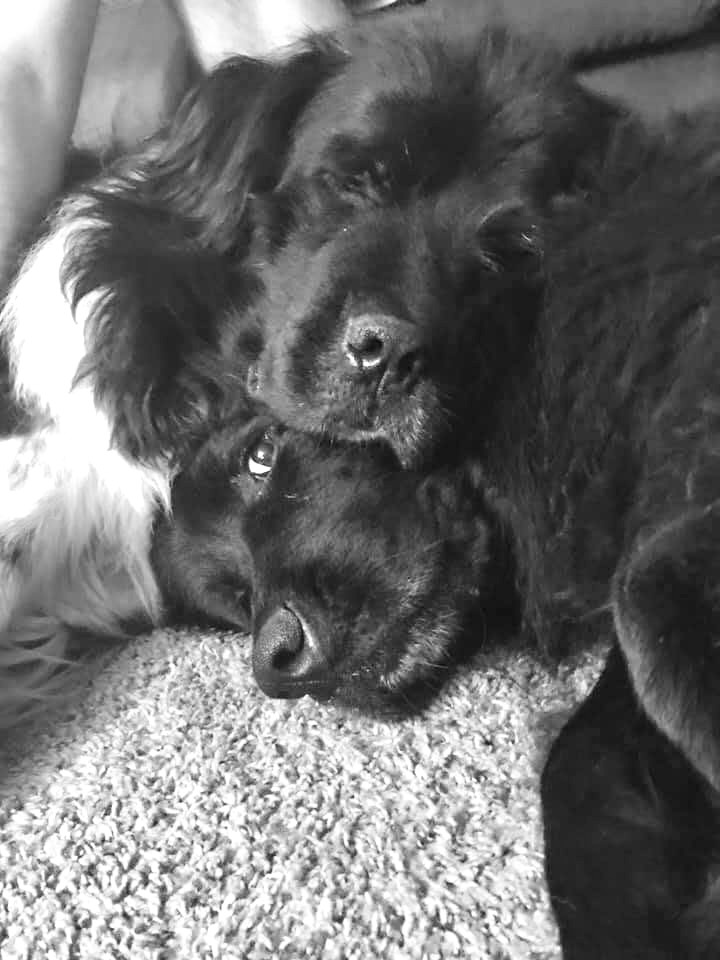
Now there is another loss I have been unable to accept well. Newfoundlands. That’s it. GB and I recognized that we had aged out of giant breeds. We could no longer safely walk a Newfie (GB had been taken down multiple times by them). We couldn’t get them into a car if they wouldn’t jump or use a ramp. After seven Newfies over forty years, we said good-bye to the breed after Boomer died.
And when I think about those dogs, I cry. I’ve accepted every loss tossed my way. Except this one. Everything about the Newfoundland Dog fills my soul with peace. I so miss the feeling of a creature who weighs more than I meandering up to me for a nose bump. I so miss the tummy rubs; the gigantic paws gently placed on my shoulder. I miss the zoomies that lasted barely a minute, or the b-line to the closest body of water for a swim. I miss the stubbornness inherent in dogs that know I can’t move them. There was never a moment over those forty years that a Newfie didn’t make me smile.
And that’s the loss I find hardest to bear. Yes, we have little Monkey. And, yes, we’ll get another pair of dogs after Monkey crosses the bridge. But they won’t be Newfies.
I know what you’re thinking. How dumb is this woman? She loses friends, family, agility, skiing, traveling with GB and she cries over big, dumb, drooling dogs? What an empty vessel of a human!
Ok. Fair at first glance. I accept the charge of shallowness. Of triviality. But what if we take a closer look?
I’m guessing the loss of the Newfoundland is symbolic of all the other losses age extracts. The others are natural. We expect to lose elders. Maybe even siblings. Certainly, friends along the way. We expect to witness the slow degradation of our physicality. We learn to adapt to rapid changes, like a botched trio of spine surgeries. Or being fired from a job. Or giving up a sport. And I’m guessing there’s that tipping point for all of us as we age. That’s why my mother didn’t look back as she left her house. Her tipping point hadn’t shown itself as she closed that door. It came later for her when chronic pain reduced her joy.
And the loss of the Newfoundland is, I guess, my tipping point. When I think of my aging, I think of those dogs no longer in my life. It just doesn’t seem fair at all.
 Air.
Air. 
Leave a comment