Writer’s note: It has dawned on me that I’ve turned my dealing-with-age blog into a vehicle for stories. I’m having fun doing this. I hope you enjoy.
When my grandfather, Louis, died in 1969, I never imagined I would miss him throughout my own life. And often. I heard his voice in my ear as a horse’s front legs buckled at the edge of a volcano in Nicaragua. Pull up! Pull up! You know how to control the horse! I remember leaving the Governor’s office one day, getting in my car and then pulling over at a phone booth to call Louis. He’ll be so proud of me. Meeting with the Governor. He’ll love this. But Louis, at that time, had been gone for ten years. I wear the 9-diamond stone ring, a bit garish in its design, daily to remind me of how many times he had to buy his way back into the good graces of my grandmother. I have vivid memories of him, his swagger, his smile, his disdain. For some reason, he and I clicked. My aunts and uncles talked about Louis’ love for me openly and without jealousy or rancor. They said I was the daughter he always wanted. Or maybe more like the son or grandson. I was adventurous, a bit out of control, curious, independent, and smart. He loved that about me, and he nurtured it. My parents didn’t like any of that. They wanted me to be compliant, humble, well-mannered, and unassuming. Well, the latter wasn’t me.
Louis was everything I thought a grandfather should be: adventuresome, loving and generous. That was Louis to me. But when I apply a telescope to his life, there is a different picture; one of a man of nuance; of cruelty and kindness; of devotion and indifference.
Louis was the oldest of seven sons born to a butcher and his wife living in a small town in Hungary/Czechoslovakia/Ukraine. I mention three countries because the boundaries changed depending upon invasion. The European wars would wreak havoc in the small border villages. In Hungary, Louis was destined to be conscripted into the Austro-Hungarian army. And, he was, likely, destined for prison. Louis was a troublemaker. He was boastful, arrogant, and prone to petty criminal activities. To avoid what they considered his fate, Sigmund and Feliz Altberger sent him to the United States in the early part of the 20th Century. Sigmund and Louis traveled to America. Louis was left with relatives in Pennsylvania. Sigmund returned to Hungary. Louis never saw his parents again.
Louis first inclination was to run away. He joined the Rough Riders and was stationed in Missouri until his underage status was discovered. Booted out of the Rough Riders, he returned to Pennsylvania where he ultimately married my grandmother, Celia, who, coincidentally was from the same village. Their marriage was not a happy union. Louis was a womanizer, a gambler, and a drinker. He was abusive to Celia and dismissive of their daughter, Charlotte. Celia threatened divorce. He agreed to stop drinking, gambling, and womanizing. He failed to keep any of those pledges. Celia developed tuberculosis and moved to Denver with Charlotte. Louis followed a few years later, opened a grocery store, purchased land by the Platte River for a slaughterhouse and feedlot. By 1949, he was a respected purveyor of prime, aged beef.
His younger brother, Sam, joined him in America, following Louis to Denver. They shared a close relationship that was marred when Sam stole Louis’ prime beef orders and substituted horse meat. The incident turned into a major scandal in the early 1950’s and Louis’s good name was severely damaged. That created a schism between the two Denver families although Louis and Sam sat with each other every Sunday at the horse races.
Two other brothers delicately maneuvered the law. Maurice, so the story goes, was in Tiszaujlak (the home village) when the Nazi’s marched into Hungary. He had purchased cattle to be transported to Budapest. He hopped onto the cattle car and began selling off cattle at each stop. When the train arrived in Budapest, the cattle and Maurice were gone. Maurice, armed with cash went into the Black Market. But his escape to Budapest didn’t dampen his familial love or duty. His brother, Andre had died in 1933 and Maurice watched over Andre’s daughters, Zsoka and Klari. As the Nazi’s marched in, he instructed them to remain in Budapest. He then turned to his brother, Ante, and begged him and his four children to leave the village and go to safety in Budapest. Zsoka and Klari remained in Budapest and were ultimately sheltered by the Swiss Ambassador, Carl Lutz who famously saved over 30,000 Jewish lives during the Shoah. Andre and his family remained in Tiszaujlak, were taken by the Nazi’s. Feliz, Ante, and his son Sigmund died in Auschwitz. The younger children were sent to work camps. After Liberation, one child emigrated to Israel and two others were brought to America by Louis.
Maurice continued the bad boys tradition in Budapest. He married but throughout his married life, he supported a mistress. His wife never knew. Upon becoming a widower, Maurice introduced his lover to the Budapest family informing them she was his cleaning lady.
Let’s see. We’ve covered five brothers: Louis, Andre, Ante, Maurice and Sam. Louis and Sam came to America. Andre died in 1933 from cancer. Ante died in Auschwitz. Maurice remained in Hungary.
The stories of the last two brothers may be most compelling of all. David married a woman named Luncie and they moved to Argentina, perhaps before WW2. Like the rest of his family, David was a cattleman. He purchased land and established his estancia. They became rather wealthy and gained the favor of Juan Peron. In 1956, David and Luncie came to visit us in Denver. They brought lavish gifts for the family: gold rings and vicuna coats. Louis, in turn, was proud to display his American gifts: his cattle business, the stockyards, the sausage kitchen, his hunting, golf and marksmanship trophies, the Best in Show ribbons won by Tessie, the then deceased Doberman Pinscher, his granddaughter’s horses, his car, his gun collection, his family and most central to his pride, his 9-year old granddaughter. Me. David suggested I return to Argentina to spend a year on the ranch. I thought it was a reasonable idea. After no consideration whatsoever, my parents said no.
David and Luncie returned. Fifteen years later, they disappeared in Argentina’s Dirty War. Thirty thousand people, including as many as 3,000 Jews, were targeted by the Junta that opposed the resurgence of Peronism. David and Luncie were gone. Their estancia confiscated by the Junta. Nothing remained of their wealth. Nothing remained of them.
And then there’s Bela. He was the youngest Altberger son and was conscripted by the Hungarian army. Now, I may not have this story straight, but as I remember, he was caught by the Russians and spent the majority of WW2 in a Russian prisoner of war camp. He returned, married and had two children. His daughter, Klari married an independent spirit named Lazlo Polgar. Lazlo held a theory that environment could produce genius. So, he undertook the schooling and chess training of his three daughters, Judit, Susan and Sophie. All three became Chess Grand Masters. All three gained international respect as they broke the absurd barriers of gender discrimination in chess and Hungarian state disapproval of their home-schooling methods.
The seven brothers included four who followed their father’s cattle business as butchers, ranchers, or brokers. Their descendants spread out throughout America, Europe, Israel, Australia, Germany, and Hungary. They lived, for the most part, successful, productive lives. They were active in their communities, law, non-profits, chess, social justice, and education. Some of them changed the world. Most, I believe, carried themselves with an air of confidence and arrogance. Most loved dogs. None had cattle.
In 1991, the Soviet Union was dissolved, and Hungary was freed from repression. By 1995, the descendants of Lazlo and Feliz Altberger had connected. The children of Louis, Sam, Ante, and Andre met; the grandchildren of Louis, Andre, Ante, and Bela had met, had dinner, celebrated birthdays, and walked the streets of Budapest together.
Czoka, daughter of Andre and I, granddaughter of Louis, were walking down Doheny Street in Budapest during Christmas, 1995. We stopped at the Doheny Street Synagogue nestled in the center of the Budapest ghetto. In 1991, the sculptor, Imre Varga, designed and created the Holocaust Tree of Life Memorial to the Hungarian victims of the Shoah. Come with me. Here. Look. We purchased this. She too my hand in hers and together we touched a metal leaf. Feliz Altberger. I began crying uncontrollably. My cousin, granddaughter of Sigmund and Feliz Altberger, and I, their great granddaughter, hugged each other in recognition of the tragedy that encompassed our family. But we were overcome with something else. Pride. Pride that we had not succumbed to the vagaries of history. The Nazi’s, the Communists, the wars, juntas, the Concentration Camps, the Work Camps, and the threats could not separate what was rightfully given to us by Sigmund and Feliz. It was an inheritance brought forward to America; it was on a train from Tiszaujlak to Budapest; it was established ad tempus in Argentina; settled in Israel and Australia; homed in Hungary; expanded to Germany. It is the story of every family. But this time, it’s the story of mine.
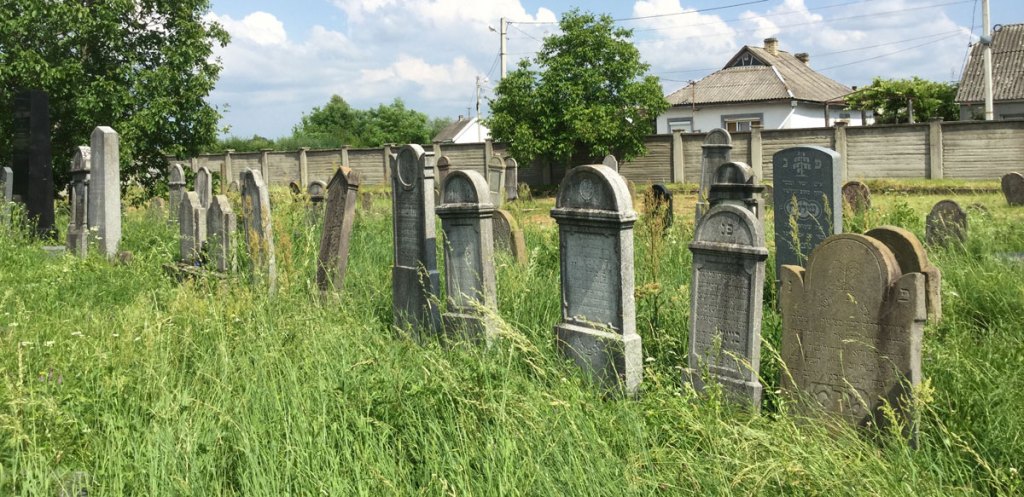
Top: The Jewish Cemetary in Tiszaujlak. In 1940, there were 1,600 Jews. All were either kidnapped by the Nazi’s or went into hiding. Today, there are none living there. JewishGen.org mentions that in 1940, there was one butcher and one feedlot. No name is given but that is my great grandfather, Sigmund.
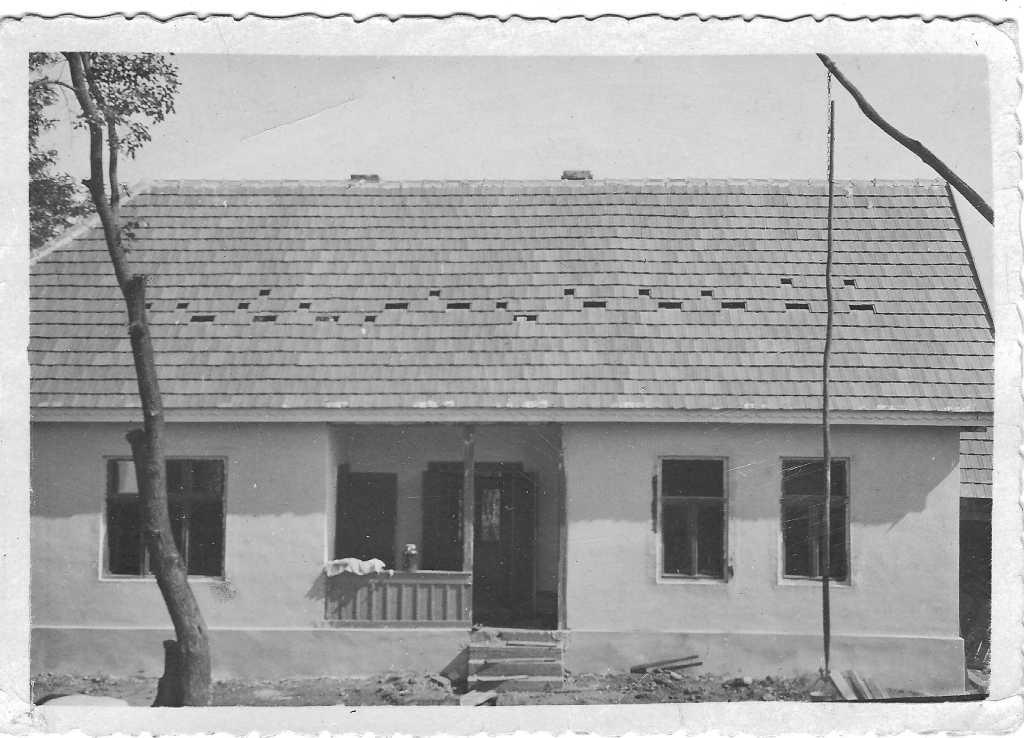
Bottom: The family home in Tiszaujlak.
 Air.
Air. 
Leave a comment