By the time I managed to organize myself to take us to the total eclipse in Wyoming on August 21, 2017, everywhere was pretty much sold out. I found a website for the City of Glendo,, a town of about 200 people. I chose Glendo because 1) it was in the full path of the eclipse and 2) it was right off I-25 and 3) totality would span 2 minutes and 30 seconds.
The residents of Glendo were ready to accommodate the 100,000 who were the anticipated invasion. So, when the population topped 150,000 Glendo was overwhelmed but prepared. Campgrounds were set up, people rented their basements, spare bedrooms, porches, or front and back lawns. I had signed up on a community web site as someone looking for accommodations for GB and me.
I spent the winter and spring hoping for some response. It was like tossing the proverbial bottle into the ocean. I was just waiting for someone to pick it up, read my note and offer us a bed.
In July, an offer arrived. A woman had opened her basement that included a small bedroom and a private bathroom! We had struck gold. The bedroom was comfortable and a quiet haven from the chaos outside. Our host even cooked hotdogs, tamales, and breakfast sandwiches, all available at a modest fee. Other food could be had on the town’s main street; tacos, more hot dogs and tamales cooked by any of the adult residents who then put their children to work selling. The town had printed up t-shirts and other eclipse merch. Yes, all sold by the children of Glendo.
This was our first eclipse. We had no idea what to expect. We made camp in a field across the street from our little basement retreat. It was bedlam. People chattered, dogs barked, children ran around making children noises, and scientists explained what would happen. Professional eclipse chasers would let us watch through their high-powered camera gear. As the eclipse began, things began to quiet. As totality set in, there was silence. Birds scattered to their nests. Stars came out. No one said anything. There was a shared sense of communal awe. As the moon passed, the sun rose for the second time that day. Birds came out, human chattering emerged from the primal sense of wonder.
The first thing we did when we returned to Denver was to check when the next North American solar eclipse was scheduled. It was to be April 8, 2024, in Mexico, Texas and across to the Northeast. We made a pact that if we were still alive, we’d go.
It was less than a decade between the eclipses but life had changed dramatically. At the first, GB was healthy and game. By the time the second came around, we were both exhausted by his condition. The trek through airports, made easier by wheelchair and porter assistance, was still difficult. He had taken to poking people with his cane if they were in the way of the wheelchair. Oh my God. Don’t do that. People in wheelchairs seem to assume that they have in front of liberties. The masses of humans should part so the wheelchair can push through. I was embarrassed that my husband, once the most considerate and polite person I ever knew, was suddenly forcing his way through crowds via the wheelchair. When we arrived at security, he began pointing his cane at his luggage and reminded me I needed to put it up on the conveyor belt. I flared. I know. I know. I don’t need your advice.
Now we considered ourselves experts on eclipse traveling so we arranged an AirBNB in Kingston, Texas. We chose Kingston because 1) the totality duration would be 3 minutes and 53 seconds; 2) it was an hour and half drive from Austin; and 3) it sat on Lake LBJ. We landed in Austin, rented a Texas truck, stopped at Whole Foods for provisions and headed out through the Hill Country which was alive with wildflowers. As we meandered through the backroads, we came across a small herd of Longhorns. I stopped the truck and walked over for a visit with the magnificent beasts. One lovely fellow nuzzled me over the fence as I scratched behind his ears. We arrived in Kingston expecting hordes of people as we encountered in Glendo. The town was empty. It was as though they didn’t know an eclipse was coming. We found our cabin by the lake and settled in.
Eclipse day arrived and it was raining. The weather forecast had been poor, and we expected rain. Our goal was to conjure a break in the clouds long enough for totality to pop through. Our hosts offered us the use of their dock on the lake. They would be watching the eclipse elsewhere. We walked over there, GB using his cane and moving slowly and carefully across the road, down a gentle hill to the dock. Boats were littering the lake, some racing up and down with incredibly noisy people hollering and waving their arms. Music roared and all I could think was that this eclipse would be met with chaos from below.
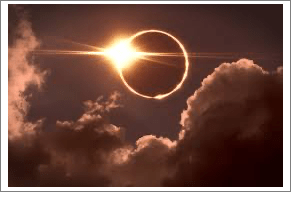
I was wrong. As the eclipse began, people quieted. Music was turned off. Boats bobbled or were put in dock. Clouds parted just enough to let us watch the progress of the moon. And as totality came across the clouds fell away, the world was, as it had been in Glendo, quiet. Birds flew to their nests. Human chattering abated. We, Texans all, greeted the silence and the darkness with reverence. And, in the moment of totality, the diamond ring exploded. And the explosion was greater than that in Glendo. It was jarring and frightful. It harbored the end of the earth. And, then it passed, and the sun rose and the birds sang again. The boats started up, the music came on and the chattering and hollering became a giant whoop! We Texans cheered this great heavenly event as one people humbled by the reality of the celestial kingdom.
So, when we returned to Austin we didn’t imagine that another gift of nature awaited us. The Congress Avenue Bridge is home to the largest colony of Brazilian free-tailed bats. Each night, 500,000 bats emerge to fly down the Colorado River (not our Colorado River, the other one I’d never heard of before . . .). Although the viewing site was only a few blocks from our hotel, GB couldn’t make the walk. So, we drove but couldn’t find a spot to park that was within GB walking distance. A kind cop let us park within a few feet of the bridge. GB held onto my arm as we made our way to a grassy hill. At sunset, the bats emerged as one, large sheet of moving water. It was overwhelming. The whole exercise took maybe five minutes, and they were gone, traveling down river to a feeding zone on the Mexico border; then back again before dawn.
I stood up, GB could not. I was unable to help him up when a young man came and lifted him to his feet. Thank you. Thank you. We walked carefully back to the car and back to the hotel where we dined in the Driskell Bar, a famous Austin watering hole that is extremely hard to find within the hotel if one is handicapped. No judgement because it’s just so cool to be there.
We were adamant about taking the trip to the Hill Country in Texas and I had signed up for the extra work of dealing with his condition. The second eclipse was a challenge. It was hard for us to get there. It was hard for the heavens to cooperate. It was ridiculously hard to maneuver the stupid truck I had rented. It was hard to enjoy the beautiful, delicate Texas Hill Country. But we did. It was the last trip we took before the surgery on November 20, 2024.
I recall this because so much had changed. My husband had gone from healthy, active, and engaged in the teaching career he adored to physically diminished, isolated, resigned, angry and depressed. He said he loved the second eclipse and I believe him. I also know it left him cognizant of what he was confronting.
The second eclipse provided a chilling metaphor about our time together and left me frightened about the future.
Austin Monthly

 Air.
Air. 
Leave a reply to Jeff Kirsch Cancel reply